
鹿おどしを英語で説明・紹介するための基本情報と、英会話に役立つ表現をシンプルでわかりやすい英語で紹介します。
英会話ダイアローグ・概要・10の質問を通して、鹿おどしに関する英語表現を学びます。
英語
英会話ダイアローグを読む前に知っておくと良い前提知識と情報です。
- 鹿おどしの基本
- 竹と水で動く日本の伝統的な装置
- もともとは鹿や猪などの野生動物を音で追い払うための農具
- 水が溜まって竹が倒れ、石に当たって音を出す仕組み
- 日本庭園との関係
- 現在の鹿おどしは、実用よりも観賞用として日本庭園や寺院、茶庭に置かれている
- ししおどしの音は、静寂を「破る」のではなく、逆に静けさを際立たせ、時間の流れや落ち着いた雰囲気を感じさせる役割
- 日本的な美意識
- 鹿おどしは、「間(ま)」や「静寂の美」、自然と人の調和といった日本文化の考え方を象徴
- シンプルな構造と自然素材が、その美意識をよく表している
- 禅とのつながり
- 規則的に繰り返される音と静かな空間は、瞑想や心を落ち着かせる
- 禅の思想では、繰り返しのリズムや間が瞑想的な雰囲気を作る
2人が鹿おどしについて話しています。
元々は鹿や猪から農作物を守る実用的な道具だったこと、竹筒に水が溜まって石を打つシンプルな仕組みなどを話題にしています。
会話 / dialogue

Key, when I visited a Japanese garden last weekend, I heard a deep “clonk” sound again and again. It was from a shishi-odoshi, right?

Yes, that’s right. It’s that bamboo device that moves with water.
I know it looks simple, but I’m really curious. What was it originally made for?
At first, it was a tool to scare away wild animals like deer and wild boars from farms.
So it wasn’t made for beauty at all?
Not at the beginning. It was purely practical, a kind of natural alarm system.
How exactly does it work?
Water slowly fills a bamboo tube. When it becomes heavy, it tips over and hits a stone, making that “clonk” sound.
And then the water flows out and it goes back?
Exactly. Gravity and water do all the work. No electricity, no machines.
That’s amazing. Such a simple system, yet it keeps moving endlessly.
That’s one of the great points. It shows how people used natural forces in a smart way.
Now I mostly see it in gardens and temples. Why did it become part of garden culture?
Because the sound makes the silence deeper. It helps people feel time passing and notice the calm atmosphere.
I felt that. Every sound made me pause and breathe.
That feeling is very close to the Japanese idea of “ma,” or space and timing.
The materials are also interesting—just bamboo, stone, and water.
Yes, very natural and simple. That simplicity is part of its charm.
So its role changed from protecting crops to creating a peaceful mood.
Exactly. It’s a good example of how a practical tool became a cultural symbol.
I also heard that it matches Zen thinking. Is that true?
In a way, yes. The repeated sound and quiet space can feel meditative.

The more I learn, the more I want to see different types of shishi-odoshi.

Some gardens even adjust the rhythm of the sound by changing the water flow.
That’s fascinating. A small change creates a different sense of time.
And that’s the true beauty of shishi-odoshi—simple, natural, and deeply meaningful.
概要(鹿おどしの仕組みと日本庭園での役割)
「鹿おどし」について、理解を深めるための「英語での概要」です。
鹿おどし
What Is a Shishi-odoshi?
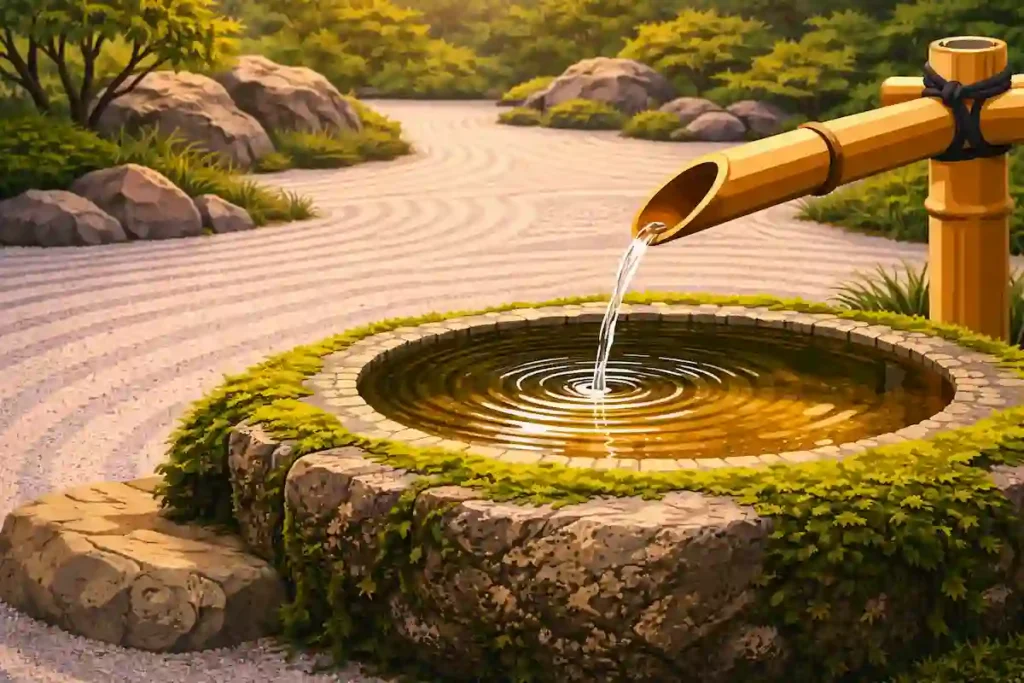
A shishi-odoshi is a traditional Japanese device made of bamboo, stone, and water. It is often seen in Japanese gardens and temple grounds. Today, many people enjoy its calm sound, but it was not made for beauty at first. It was originally a tool to scare away wild animals such as deer and wild boars from farms.
How It Works
The structure is very simple. Water slowly flows into a bamboo tube. As the tube becomes heavy, it tips over and hits a stone, making a clear “clonk” sound. Then the water flows out, the tube becomes light again, and it returns to its original position. This movement repeats again and again using only water and gravity.
Original Purpose
In the past, farmers used shishi-odoshi to protect their crops. The sudden sound surprised animals and made them stay away from fields. It worked like a natural alarm system, without any electricity or machines.
Role in Japanese Gardens
Today, shishi-odoshi are mainly placed in Japanese gardens and tea gardens. Their sound makes the silence of the space feel deeper. It also helps people feel the passage of time and enjoy a calm, peaceful atmosphere.
Cultural Meaning and Charm
The charm of a shishi-odoshi is its simplicity and natural power. With only bamboo, water, and stone, it creates rhythm and movement. It also shows the Japanese idea of harmony between nature and human design. What is especially interesting is that a practical farming tool has become a symbol of beauty, quietness, and even a Zen-like feeling in modern Japanese gardens.
10の質問(鹿おどしの基本がわかるQ&A)
「鹿おどし」について、理解を深めるための「英語での10の質問」です。
和訳付
会話 / dialogue
Key, when I visited a Japanese garden last weekend, I heard a deep “clonk” sound again and again. It was from a shishi-odoshi, right?
先週、日本庭園に行ったときに「コーン」っていう低い音が何度も聞こえたんだ。あれって鹿おどしだよね?
Yes, that’s right. It’s that bamboo device that moves with water.
うん、そうだよ。水で動く竹の装置だね。
I know it looks simple, but I’m really curious. What was it originally made for?
見た目はシンプルだけど、すごく気になるんだ。もともとは何のために作られたの?
At first, it was a tool to scare away wild animals like deer and wild boars from farms.
最初は、畑から鹿やイノシシみたいな野生動物を追い払うための道具だったんだよ。
So it wasn’t made for beauty at all?
じゃあ、最初から観賞用だったわけじゃないんだね。
Not at the beginning. It was purely practical, a kind of natural alarm system.
最初は完全に実用目的だね。自然の力を使った警報装置みたいなものさ。
How exactly does it work?
仕組みはどうなってるの?
Water slowly fills a bamboo tube. When it becomes heavy, it tips over and hits a stone, making that “clonk” sound.
竹筒に水が少しずつ溜まって、重くなると倒れて石に当たって「コーン」という音が出るんだ。
And then the water flows out and it goes back?
それで水が流れ出て、元の位置に戻るんだよね?
Exactly. Gravity and water do all the work. No electricity, no machines.
その通り。重力と水だけで動くんだ。電気も機械もいらない。
That’s amazing. Such a simple system, yet it keeps moving endlessly.
すごいよね。こんなにシンプルなのに、ずっと動き続けるなんて。
That’s one of the great points. It shows how people used natural forces in a smart way.
そこがすごいところなんだ。昔の人が自然の力をうまく使っていたのが分かるよ。
Now I mostly see it in gardens and temples. Why did it become part of garden culture?
今は庭園やお寺で見ることが多いけど、どうして庭の文化に取り入れられたの?
Because the sound makes the silence deeper. It helps people feel time passing and notice the calm atmosphere.
その音があることで静けさがより際立つし、時間の流れや落ち着いた雰囲気を感じやすくなるからだよ。
I felt that. Every sound made me pause and breathe.
確かに。音がするたびに、ふっと立ち止まって深呼吸したくなったよ。
That feeling is very close to the Japanese idea of “ma,” or space and timing.
その感覚は、日本の「間(ま)」の考え方にすごく近いね。
The materials are also interesting—just bamboo, stone, and water.
材料も面白いよね。竹と石と水だけなんて。
Yes, very natural and simple. That simplicity is part of its charm.
うん、とても自然でシンプル。そのシンプルさ自体が魅力なんだ。
So its role changed from protecting crops to creating a peaceful mood.
つまり、作物を守る道具から、癒やしの雰囲気を作る存在に変わったんだね。
Exactly. It’s a good example of how a practical tool became a cultural symbol.
そう。実用品が文化的な象徴になった良い例だよ。
I also heard that it matches Zen thinking. Is that true?
禅の考え方にも合っているって聞いたけど、本当?
In a way, yes. The repeated sound and quiet space can feel meditative.
ある意味ではね。繰り返す音と静かな空間は、瞑想しているような気分にさせてくれる。
The more I learn, the more I want to see different types of shishi-odoshi.
知れば知るほど、いろんな鹿おどしを見てみたくなるよ。
Some gardens even adjust the rhythm of the sound by changing the water flow.
庭によっては、水の量を変えて音のリズムを調整しているところもあるんだ。
That’s fascinating. A small change creates a different sense of time.
面白いね。ちょっとした違いで、時間の感じ方まで変わるんだ。
And that’s the true beauty of shishi-odoshi—simple, natural, and deeply meaningful.
それこそが鹿おどしの本当の魅力だよ。シンプルで自然で、そしてとても奥深いんだ。

概要(鹿おどしの仕組みと日本庭園での役割)
鹿おどし
What Is a Shishi-odoshi?
A shishi-odoshi is a traditional Japanese device made of bamboo, stone, and water. It is often seen in Japanese gardens and temple grounds. Today, many people enjoy its calm sound, but it was not made for beauty at first. It was originally a tool to scare away wild animals such as deer and wild boars from farms.
鹿おどしは、竹・石・水で作られた日本の伝統的な装置です。日本庭園や寺院の境内でよく見られます。現在はその静かな音が楽しまれていますが、もともとは鑑賞用ではなく、鹿やイノシシなどの野生動物を畑から追い払うための道具でした。
How It Works
The structure is very simple. Water slowly flows into a bamboo tube. As the tube becomes heavy, it tips over and hits a stone, making a clear “clonk” sound. Then the water flows out, the tube becomes light again, and it returns to its original position. This movement repeats again and again using only water and gravity.
仕組みはとてもシンプルです。水が少しずつ竹筒に流れ込み、重くなると倒れて石に当たり、「コーン」という音を出します。水が流れ出ると再び軽くなり、元の位置に戻ります。この動きを、水と重力だけで繰り返します。
Original Purpose
In the past, farmers used shishi-odoshi to protect their crops. The sudden sound surprised animals and made them stay away from fields. It worked like a natural alarm system, without any electricity or machines.
昔、農家は作物を守るために鹿おどしを使っていました。突然の音で動物を驚かせ、畑に近づかせないようにしていたのです。電気や機械を使わない、自然の警報装置のような役割でした。
Role in Japanese Gardens
Today, shishi-odoshi are mainly placed in Japanese gardens and tea gardens. Their sound makes the silence of the space feel deeper. It also helps people feel the passage of time and enjoy a calm, peaceful atmosphere.
現在、鹿おどしは主に日本庭園や茶庭に置かれています。その音は静けさをいっそう際立たせ、時間の流れを感じさせ、落ち着いた雰囲気を楽しませてくれます。
Cultural Meaning and Charm
The charm of a shishi-odoshi is its simplicity and natural power. With only bamboo, water, and stone, it creates rhythm and movement. It also shows the Japanese idea of harmony between nature and human design. What is especially interesting is that a practical farming tool has become a symbol of beauty, quietness, and even a Zen-like feeling in modern Japanese gardens.
鹿おどしの魅力は、そのシンプルさと自然の力にあります。竹・水・石だけで、リズムと動きを生み出します。また、自然と人の工夫が調和する日本的な考え方も表しています。実用的な農具が、今では美しさや静けさ、さらには禅的な雰囲気を象徴する存在になっている点が、とても興味深いところです。
10の質問(鹿おどしの基本がわかるQ&A)
1: What is a shishi-odoshi?
鹿おどしとは何ですか?
A shishi-odoshi is a traditional Japanese device made of bamboo and water that makes a “clonk” sound.
鹿おどしは、竹と水で作られ、「コーン」という音を出す日本の伝統的な装置です。
2: What was a shishi-odoshi originally used for?
鹿おどしはもともと何のために使われていましたか?
It was used to scare away wild animals such as deer and wild boars from farms.
もともとは、鹿やイノシシなどの野生動物を畑から追い払うために使われていました。
3: How does a shishi-odoshi make sound?
鹿おどしはどのようにして音を出しますか?
Water fills a bamboo tube, the tube becomes heavy, tips over, and hits a stone, making a sound.
水が竹筒に溜まって重くなり、倒れて石に当たることで音が出ます。
4: What materials are used to make a shishi-odoshi?
鹿おどしは何で作られていますか?
It is mainly made of bamboo, stone, and water.
主に竹、石、水で作られています。
5: Does a shishi-odoshi use electricity?
鹿おどしは電気を使いますか?
No, it works only with water and gravity, without any machines or electricity.
いいえ、水と重力だけで動き、機械や電気は使いません。
6: Where can we usually see shishi-odoshi today?
現在、鹿おどしはどこで見られますか?
Today, they are often seen in Japanese gardens, temples, and tea gardens.
現在は、日本庭園や寺院、茶庭などでよく見られます。
7: Why are shishi-odoshi placed in gardens now?
なぜ今は庭園に置かれているのですか?
Their sound makes the silence deeper and creates a calm and peaceful atmosphere.
その音が静けさを際立たせ、落ち着いた雰囲気を作り出すからです。
8: What kind of feeling does the sound give people?
その音は人にどんな印象を与えますか?
The sound helps people feel the passage of time and relax in a quiet space.
時間の流れを感じさせ、静かな空間でリラックスさせてくれます。
9: How is a shishi-odoshi related to Japanese culture?
鹿おどしは日本文化とどのように関係していますか?
It shows the harmony between nature and human design and the beauty of simplicity.
自然と人の工夫の調和や、シンプルさの美しさを表しています。
10: What is the special charm of a shishi-odoshi?
鹿おどしの特別な魅力は何ですか?
Its charm is that a simple farming tool has become a symbol of calm, beauty, and a Zen-like feeling in Japanese gardens.
シンプルな農具が、日本庭園で静けさや美しさ、禅的な雰囲気を象徴する存在になったことです。
words & phrases
英会話ダイアローグと関連情報に出てきた単語・フレーズです(例文は各3つ)。
clonk : 名詞・動詞 /klɒŋk/
意味: ドン、コーンという鈍い音。A dull, heavy sound made when something hits another object.
(鹿おどしの竹筒が石に当たるときに出る音を表す)
例文:
•I heard a clonk from the bamboo device in the garden.
「庭の竹の装置からコーンという音が聞こえました。」
•The tube fell with a loud clonk.
「筒が大きなコーンという音を立てて倒れました。」
•Every few seconds, the clonk broke the silence.
「数秒ごとにコーンという音が静けさを破りました。」
scare : 動詞・名詞 /skeər/
意味: 怖がらせる、驚かせる。To make someone or something feel afraid.
(鹿おどしが動物を音で追い払うことを表す)
例文:
•The sound was used to scare animals away.
「その音は動物を追い払うために使われました。」
•Loud noises can scare birds.
「大きな音は鳥を驚かせます。」
•The farmer used a device to scare wild boars.
「農家はイノシシを追い払うために装置を使いました。」
boar : 名詞 /bɔːr/
意味: イノシシ。A wild pig.
(鹿と同様に、畑を荒らす野生動物の一例)
例文:
•A wild boar came near the rice field.
「イノシシが田んぼの近くに来ました。」
•The fence protects crops from boars.
「その柵は作物をイノシシから守ります。」
•Boars are common in mountain areas.
「イノシシは山間部でよく見られます。」
practical : 形容詞 /ˈpræk.tɪ.kəl/
意味: 実用的な。Useful in real situations, not only for beauty or theory.
(鹿おどしがもともと農具として役立つ道具だったことを表す)
例文:
•The tool was simple but very practical.
「その道具はシンプルですがとても実用的でした。」
•Farmers need practical solutions.
「農家には実用的な解決策が必要です。」
•The design is practical and easy to use.
「そのデザインは実用的で使いやすいです。」
meditative : 形容詞 /ˈmed.ɪ.teɪ.tɪv/
意味: 瞑想的な、心を落ち着かせる。Helping people feel calm and thoughtful.
(鹿おどしの音と静けさが瞑想のような気分を与えることを表す)
例文:
•The quiet garden felt very meditative.
「その静かな庭はとても瞑想的に感じられました。」
•The sound of water creates a meditative mood.
「水の音は瞑想的な雰囲気を作ります。」
•Walking in the temple was a meditative experience.
「寺を歩くことは瞑想的な体験でした。」