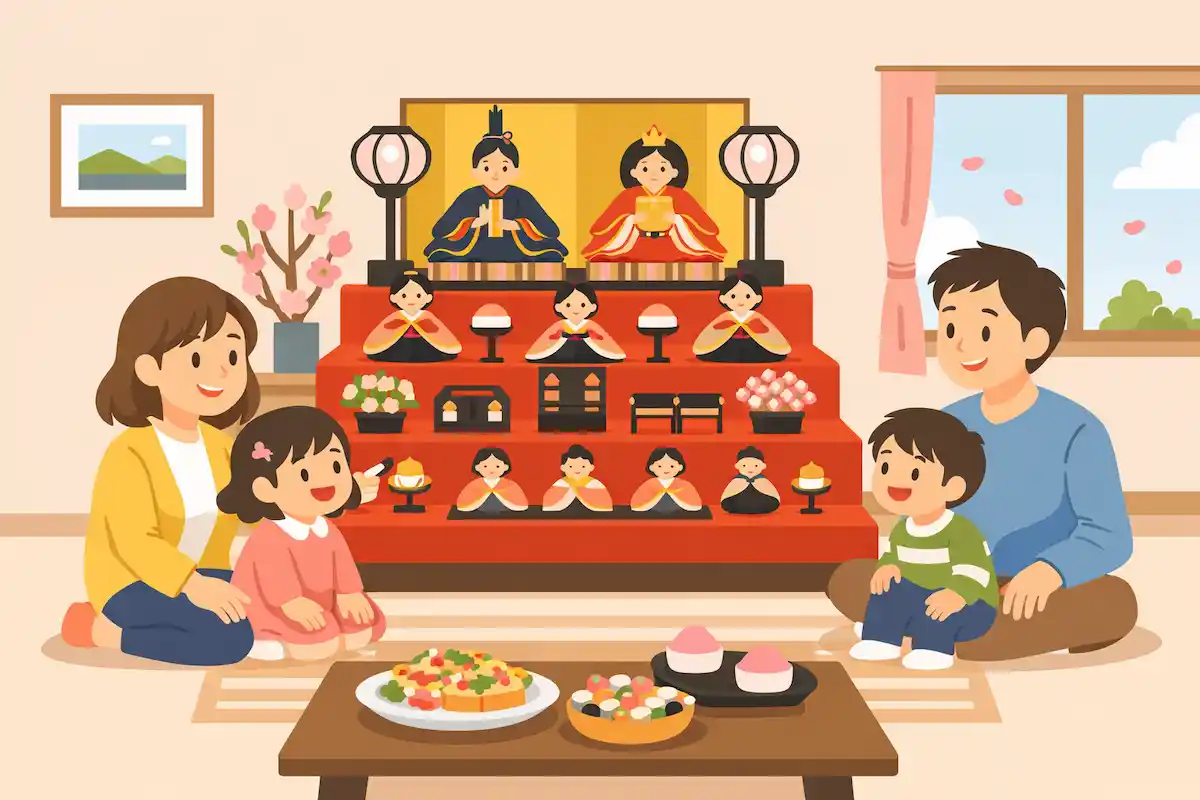
ひな祭りを英語で説明・紹介するための基本情報と、英会話に役立つ表現をシンプルでわかりやすい英語で紹介します。
英会話ダイアローグ・概要・10の質問を通して、ひな祭りに関する英語表現を学びます。
英語
英会話ダイアローグを読む前に知っておくと良い前提知識と情報です。
- ひな祭りとは
- 3月3日に行われる女の子の健やかな成長と幸せを願う日本の伝統行事、「桃の節句」とも呼ばれる
- 桃は昔から厄除けや魔除けの象徴とされ、春の訪れとともに子どもを守る意味がある
- 雛人形の意味
- 雛人形は、平安時代の天皇・皇后を表す
- 単なる装飾ではなく、災いを人形に託し、子どもを守る「身代わり」の役割がある
- 家庭行事としての特徴
- 家族で人形を飾り、食事を楽しみながら子どもの成長を願う、内向きで温かな行事
- 伝統的な食べ物
- ちらし寿司、菱餅、雛あられ、白酒や甘酒などが定番
- それぞれの食材や色には長寿、健康、魔除けなどの意味が込められている
- 白(雪): 清浄、純白の雪
- 緑(大地): 健康、雪の下から芽吹く新芽
- ピンク(花): 魔除け、桃の花
- 現代のひな祭りの変化
- 現在では、七段飾りよりもコンパクトな雛人形が主流
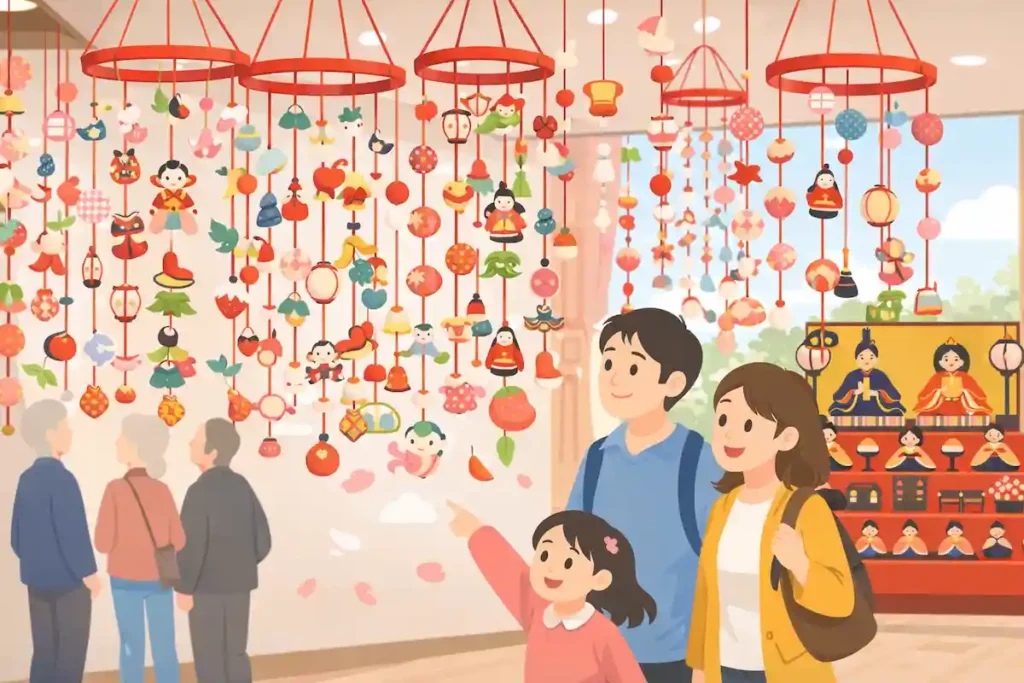
- 吊るし雛の展示など、観光・文化イベントとしての広がりもある
2人がひな祭りについて話しています。
ひな祭りの由来、雛人形の意味、桃の花の役割、ちらし寿司などの伝統食、観光イベントとしての広がりなどを話題にしています。
会話 / dialogue

Hey Key, March is coming soon. I’ve been seeing Hinamatsuri decorations in shops, and it made me curious again.

Yeah, it’s that time of year. Are you interested in Hinamatsuri?
I am, actually. I know it’s for girls, but I feel there’s a lot more meaning behind it. I want to understand it better.
You’re right. Hinamatsuri is mainly about wishing for girls’ healthy growth and happiness, but it also reflects many Japanese values.
It’s held on March 3rd, right? Why that date?
Yes. It comes from an old seasonal festival and is also called the Peach Festival. Peach flowers were believed to protect people from bad luck.
That explains the flowers. What about the dolls? They look very formal and elegant.
The dolls represent the Emperor and Empress from the Heian period. They show an ideal and peaceful life.
So they’re not just decorations.
Exactly. People believed the dolls could take away bad luck and protect children. That’s one of the special points of Hinamatsuri.
I like how quiet the celebration feels. It’s very different from summer festivals.
That’s another feature. Hinamatsuri is usually celebrated at home with family, not outside with big crowds.
What kind of food do people usually eat?
Chirashi sushi is very common. The ingredients have good meanings, like long life and good health. There are also colorful rice crackers and sweet drinks.
Everything seems to have a meaning. That’s impressive.
Yes, that’s what makes it special. The food, colors, dolls, and even the season all connect to people’s wishes.
Is Hinamatsuri still popular these days?
I’d say yes. The style has changed, though. Many families now choose smaller doll displays that fit modern homes.
I’ve also seen hanging doll exhibitions advertised. They look amazing.
They are. Those events have become popular with tourists too, because they’re colorful and easy to enjoy.
So it’s popular not only as a family event but also as a cultural experience.
Exactly. It’s not loud or flashy, but it’s meaningful and easy to relate to.

I’d love to visit a Hinamatsuri exhibition this year and maybe take some photos.

That’s a great idea. It’s a good way to feel Japanese history and the coming of spring.
The more I learn, the more I feel Hinamatsuri is about kindness and care.
That’s a perfect way to describe it. Hinamatsuri quietly shows how people wish happiness for the next generation.
概要(ひな祭りとは?日本の春の伝統行事)
「ひな祭り」について、理解を深めるための「英語での概要」です。
ひな祭り
What Is Hinamatsuri?
Hinamatsuri, also known as the Doll Festival or the Peach Festival, is a traditional Japanese event held every year on March 3rd. It is a day to pray for the healthy growth and happiness of girls. Families celebrate Hinamatsuri at home and enjoy spending time together while welcoming the coming of spring.
The Origin of Hinamatsuri
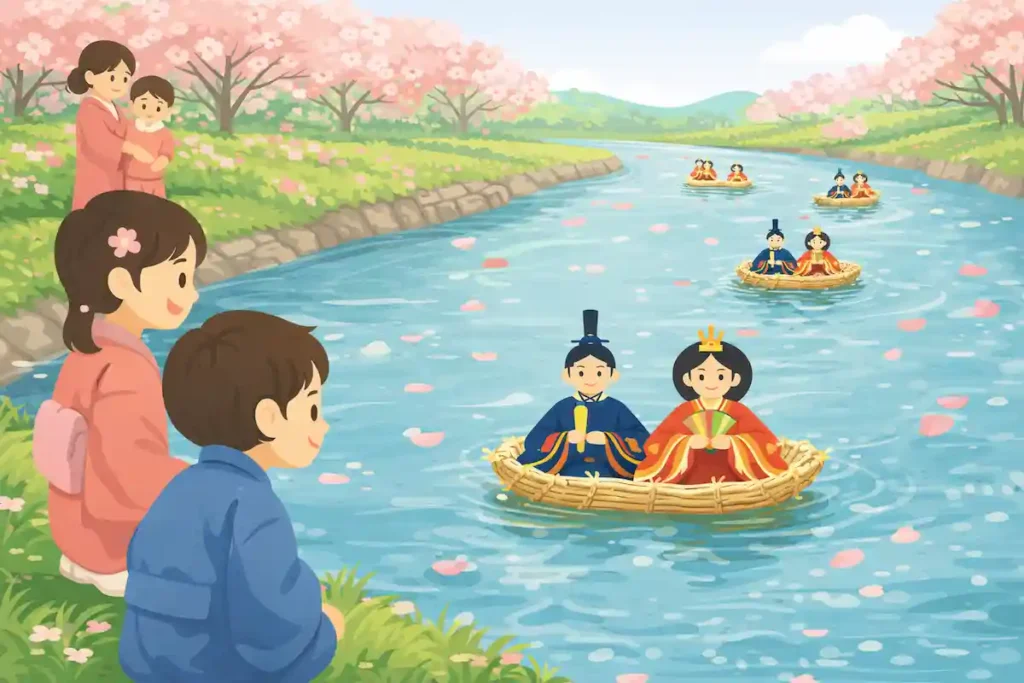
Hinamatsuri began long ago as a custom to remove bad luck. People believed that dolls could take away illness and misfortune. In the past, simple paper dolls were used and sometimes placed in rivers to carry away bad luck. Over time, this custom changed into the tradition of displaying dolls at home.
Hinamatsuri Dolls and Their Meaning
The dolls displayed during Hinamatsuri represent the Emperor and Empress from the Heian period. They show an ideal and peaceful life. The dolls are not only decorations. They are believed to protect children by taking away bad luck. Today, many families choose small and simple doll displays that fit modern homes.
Special Food and Decorations
On Hinamatsuri, families eat special foods such as chirashi sushi, colorful rice crackers, and sweet drinks. These foods have good meanings, like health and long life. Peach flowers are also displayed because they are believed to protect people from bad luck and bring good fortune.
Hinamatsuri Today
Today, Hinamatsuri is still popular in Japan. It is a quiet family event rather than a loud festival. In addition, exhibitions such as hanging doll displays attract many visitors. Hinamatsuri continues to be loved because it gently shows care, tradition, and the joy of welcoming spring.
10の質問(ひな祭りの基本がわかるQ&A)
「ひな祭り」について、理解を深めるための「英語での10の質問」です。
和訳付
会話 / dialogue
Hey Key, I’ve been seeing Hinamatsuri decorations around town lately, and it really caught my attention.
ねえKey、最近街でひな祭りの飾りをよく見かけてさ。なんだかすごく気になってきたんだ。
Yeah, it’s almost March. Are you interested in Hinamatsuri?
そうだね、もうすぐ3月だし。ひな祭りに興味が出てきたの?
I am. I know it’s a festival for girls, but I feel there’s more to it than that.
うん。女の子のお祭りっていうのは知ってるけど、それだけじゃない気がして。
You’re right. Hinamatsuri is about wishing for girls’ healthy growth and happiness, but it also shows a lot about Japanese culture.
その通り。女の子の健やかな成長と幸せを願う行事だけど、日本文化の考え方もよく表れているよ。
It’s held on March 3rd, right? Why that date?
3月3日だよね?どうしてその日なの?
It comes from an old seasonal festival and is also called the Peach Festival. Peach flowers were believed to protect people from bad luck.
昔の季節行事が由来で、「桃の節句」とも呼ばれているんだ。桃は厄除けの象徴なんだよ。
That explains the peach flowers. What about the dolls? They look very formal.
なるほどね。じゃあ、あの雛人形は何を表しているの?
They represent the Emperor and Empress from the Heian period and show an ideal, peaceful life.
平安時代の天皇と皇后を表していて、理想的で穏やかな人生の象徴なんだ。
So they’re not just beautiful decorations.
ただきれいな飾りってわけじゃないんだね。
Exactly. People believed the dolls could take away bad luck and protect children.
そう。人形が災いを引き受けて、子どもを守ってくれると考えられていたんだ。
I like how quiet the festival feels. It’s very different from summer festivals.
静かな雰囲気がいいよね。夏祭りとは全然違う感じがする。
That’s one of its main features. Hinamatsuri is usually celebrated at home with family.
そこが大きな特徴だね。ひな祭りは家族で家の中で祝う行事だから。
What kind of food do people usually eat?
食べ物はどんなものが定番なの?
Chirashi sushi is common, and the ingredients have good meanings like health and long life.
ちらし寿司が定番だね。具材には健康や長寿といった縁起の意味があるんだ。
It sounds like everything has a meaning.
全部に意味が込められている感じがするね。
That’s what makes Hinamatsuri special. The dolls, food, colors, and even the season are all connected.
そこがすごいところなんだ。人形も食べ物も色も季節も、全部つながっている。
Is Hinamatsuri still popular these days?
今でもひな祭りって人気あるの?
Yes, but the style has changed. Many families now choose smaller doll displays that fit modern homes.
あるよ。ただし形は変わってきていて、今はコンパクトな飾りを選ぶ家庭が多いね。
I’ve also seen hanging doll exhibitions. They look really beautiful.
吊るし雛の展示も見かけたよ。すごくきれいだよね。
They’re popular with tourists too. They’re colorful and easy to enjoy, even without deep knowledge.
観光客にも人気だよ。知識がなくても楽しめるし、見た目も華やかだからね。
So Hinamatsuri is popular both as a family event and as a cultural experience.
家庭行事としても、文化体験としても人気があるんだね。
Exactly. It’s not flashy, but it’s warm and meaningful.
そう。派手じゃないけど、あたたかくて意味のある行事なんだ。
I’d like to visit a Hinamatsuri exhibition this year and learn more.
今年はひな祭りの展示を見に行って、もっと知りたくなってきたよ。
That’s a great idea. You can really feel Japanese history and the coming of spring.
いいね。日本の歴史や春の訪れを実感できると思うよ。
The more I learn, the more I feel Hinamatsuri is about kindness and care.
知れば知るほど、ひな祭りって思いやりの行事だなって感じる。
That’s a perfect summary. Hinamatsuri quietly shows how people wish happiness for the next generation.
まさにその通りだね。次の世代の幸せを静かに願う行事なんだ。
概要(ひな祭りとは?日本の春の伝統行事)
ひな祭り
What Is Hinamatsuri?
Hinamatsuri, also known as the Doll Festival or the Peach Festival, is a traditional Japanese event held every year on March 3rd. It is a day to pray for the healthy growth and happiness of girls. Families celebrate Hinamatsuri at home and enjoy spending time together while welcoming the coming of spring.
ひな祭りは、雛祭りや桃の節句とも呼ばれる日本の伝統行事で、毎年3月3日に行われます。女の子の健やかな成長と幸せを願う日で、家族が家で祝い、春の訪れを感じながら一緒の時間を過ごします。
The Origin of Hinamatsuri
Hinamatsuri began long ago as a custom to remove bad luck. People believed that dolls could take away illness and misfortune. In the past, simple paper dolls were sometimes placed in rivers to carry away bad luck. Over time, this custom changed into the tradition of displaying dolls at home.
ひな祭りは、厄を払うための古い風習として始まりました。人々は人形が病気や不運を引き受けてくれると信じていました。昔は紙の人形を川に流すこともありましたが、次第に家に人形を飾る形へと変化しました。
Hinamatsuri Dolls and Their Meaning
The dolls displayed during Hinamatsuri represent the Emperor and Empress from the Heian period. They show an ideal and peaceful life. The dolls are not only decorations but are believed to protect children by taking away bad luck. Today, many families choose small and simple doll displays that fit modern homes.
ひな祭りで飾られる雛人形は、平安時代の天皇と皇后を表しています。理想的で穏やかな人生の象徴であり、単なる飾りではなく、子どもを守る存在と考えられています。現代では、住環境に合った小さな飾りが多く選ばれています。
Special Food and Decorations
On Hinamatsuri, families eat special foods such as chirashi sushi, colorful rice crackers, and sweet drinks. These foods have good meanings, like health and long life. Peach flowers are also displayed because they are believed to protect people from bad luck and bring good fortune.
ひな祭りには、ちらし寿司やひなあられ、甘い飲み物などを食べます。これらの食べ物には、健康や長寿といった縁起の良い意味があります。また、厄除けや幸福を願って桃の花も飾られます。
Hinamatsuri Today
Today, Hinamatsuri is still popular in Japan. It is a quiet family event rather than a loud festival. In addition, exhibitions such as hanging doll displays attract many visitors. Hinamatsuri continues to be loved because it gently shows care, tradition, and the joy of welcoming spring.
現代でも、ひな祭りは日本で親しまれています。にぎやかな祭りではなく、家庭で静かに祝う行事です。近年は吊るし雛の展示なども人気で、多くの人を集めています。ひな祭りは、思いやりや伝統、春を迎える喜びを伝える行事として愛され続けています。
10の質問(ひな祭りの基本がわかるQ&A)
1: What is Hinamatsuri?
ひな祭りとは何ですか?
Hinamatsuri is a traditional Japanese event held on March 3rd to wish for the healthy growth and happiness of girls.
ひな祭りは、女の子の健やかな成長と幸せを願って、毎年3月3日に行われる日本の伝統行事です。
2: Why is Hinamatsuri celebrated on March 3rd?
なぜひな祭りは3月3日に行われるのですか?
March 3rd comes from an old seasonal festival and is also known as the Peach Festival, which welcomes the coming of spring.
3月3日は古い季節行事に由来し、春の訪れを祝う「桃の節句」として知られています。
3: What does “Peach Festival” mean?
「桃の節句」とはどういう意味ですか?
Peach Festival refers to a seasonal event using peach flowers, which were believed to protect people from bad luck.
桃の節句とは、厄除けの力があると信じられてきた桃の花を用いる季節行事を指します。
4: What are Hinamatsuri dolls?
ひな祭りの雛人形とは何ですか?
Hinamatsuri dolls represent the Emperor and Empress from the Heian period and show an ideal and peaceful life.
雛人形は平安時代の天皇と皇后を表し、理想的で穏やかな人生を象徴しています。
5: Why do people display dolls during Hinamatsuri?
なぜひな祭りで人形を飾るのですか?
People believed that the dolls could take away bad luck and protect children from illness and misfortune.
人形が厄や病気、不運を引き受け、子どもを守ってくれると信じられてきたからです。
6: How do families usually celebrate Hinamatsuri?
家庭ではどのようにひな祭りを祝いますか?
Families decorate their homes with dolls, eat special food, and spend quiet time together.
家庭では雛人形を飾り、行事食を楽しみながら、家族で静かな時間を過ごします。
7: What kind of food is eaten on Hinamatsuri?
ひな祭りにはどんな食べ物を食べますか?
Common foods include chirashi sushi, colorful rice crackers, and sweet drinks.
ちらし寿司、ひなあられ、甘い飲み物などが一般的です。
8: What is special about Hinamatsuri food?
ひな祭りの食べ物の特徴は何ですか?
The food has good meanings such as health, long life, and happiness, not just good taste.
ひな祭りの食べ物には、味だけでなく、健康・長寿・幸せといった縁起の意味があります。
9: Is Hinamatsuri still popular today?
ひな祭りは今でも人気がありますか?
Yes, it is still popular, but many families now choose smaller doll displays that fit modern homes.
はい、今でも人気がありますが、現代の住まいに合ったコンパクトな飾りを選ぶ家庭が増えています。
10: Why is Hinamatsuri interesting for foreign visitors?
なぜひな祭りは外国人観光客にとって興味深いのですか?
It is easy to understand because it shows Japanese family values, traditional dolls, and the feeling of spring.
家族を大切にする考え方や伝統的な人形、春の雰囲気が分かりやすく伝わるからです。
words & phrases
英会話ダイアローグと関連情報に出てきた単語・フレーズです(例文は各3つ)。
decoration : 名詞 /ˌdek.əˈreɪ.ʃən/
意味: 飾り、装飾。Something used to make a place look more attractive.
(ひな祭りの雛人形や桃の花など、家の中を飾るものを指す)
例文:
•The Hinamatsuri decorations are beautiful and colorful.
「ひな祭りの飾りは美しく、色鮮やかです。」
•Families put up decorations in early March.
「家族は3月初めに飾り付けをします。」
•Peach flowers are a common decoration for Hinamatsuri.
「桃の花はひな祭りの一般的な飾りです。」
take away : 動詞句 /teɪk əˈweɪ/
意味: 取り除く、持ち去る。To remove or get rid of something.
(雛人形が災いや不運を取り除く、という考えを表す)
例文:
•People believed the dolls could take away bad luck.
「人々は人形が厄を取り除くと信じていました。」
•This custom was meant to take away illness.
「この風習は病気を取り除くためのものでした。」
•Fresh air can take away stress.
「新鮮な空気はストレスを和らげてくれます。」
reflect : 動詞 /rɪˈflekt/
意味: 反映する、表す。To show or represent something.
(ひな祭りが日本文化や価値観を表していることを指す)
例文:
•Hinamatsuri reflects Japanese family values.
「ひな祭りは日本の家族観を反映しています。」
•The dolls reflect life in the Heian period.
「雛人形は平安時代の生活を表しています。」
•His words reflect his kindness.
「彼の言葉は彼の優しさを表しています。」
impressive : 形容詞 /ɪmˈpres.ɪv/
意味: 印象的な、感動的な。Making a strong positive impression.
(吊るし雛の展示や雛人形の美しさを見て感じる印象を表す)
例文:
•The hanging doll display was very impressive.
「吊るし雛の展示はとても印象的でした。」
•The details of the dolls are impressive.
「人形の細部は印象的です。」
•She gave an impressive presentation.
「彼女は印象的なプレゼンをしました。」
flashy : 形容詞 /ˈflæʃ.i/
意味: 派手な、けばけばしい。Very bright, colorful, or attention-getting.
(ひな祭りが派手ではない、という対比表現で使われる)
例文:
•Hinamatsuri is not flashy, but it is meaningful.
「ひな祭りは派手ではありませんが、意味のある行事です。」
•Summer festivals are more flashy than Hinamatsuri.
「夏祭りはひな祭りより派手です。」
•He likes flashy clothes.
「彼は派手な服が好きです。」