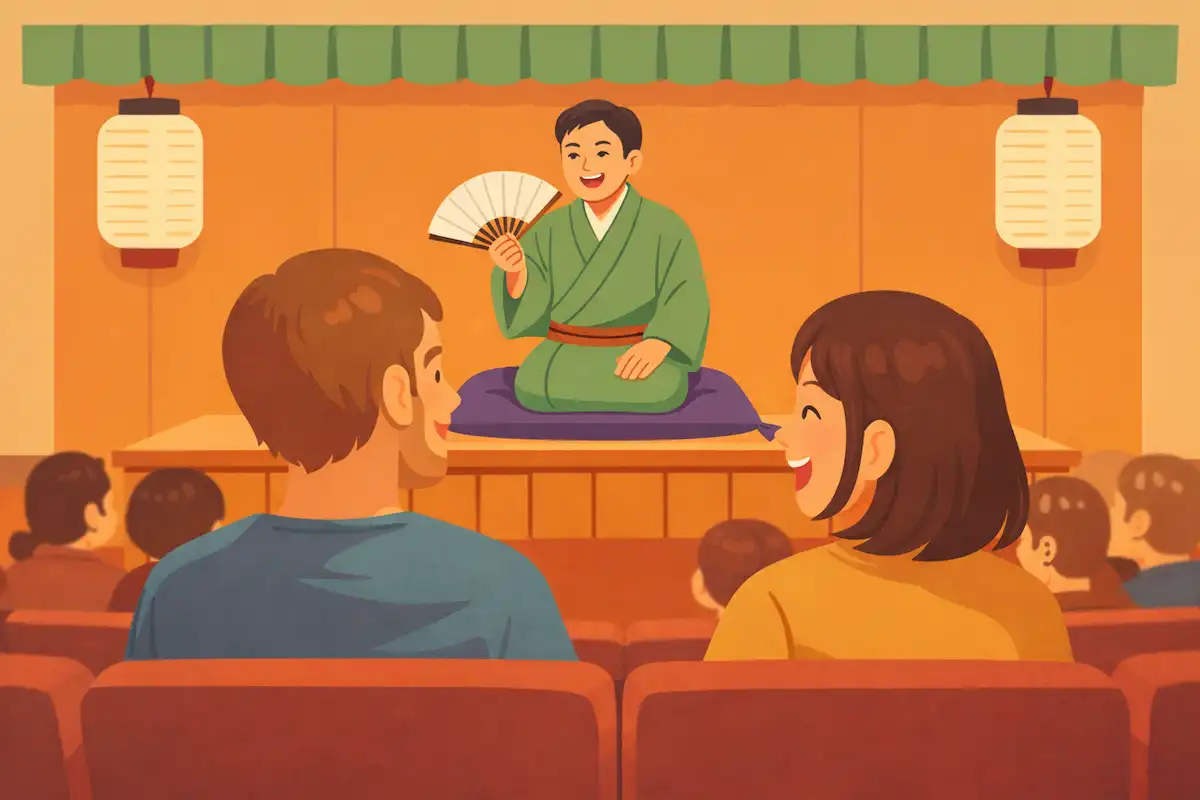
落語を英語で説明・紹介するための基本情報と、英会話に役立つ表現をシンプルでわかりやすい英語で紹介します。
英会話ダイアローグ・概要・10の質問を通して、落語に関する英語表現を学びます。
英語
英会話ダイアローグを読む前に知っておくと良い前提知識と情報です。
- 落語とは
- 一人の噺家が座ったまま、声や表情、間を使って複数の人物を演じ分ける日本の伝統的な話芸
- 扇子と手ぬぐいだけで場面や道具を表現
- 落語の基本構成
- 話は「まくら(導入の雑談)」「本題」「オチ(最後の笑いやひねり)」の三部構成
- オチの役割
- 物語の最後にくる決めの一言で、意外性や言葉遊びによって笑いを生む
- 題材は庶民の生活や人情
- 江戸時代の町人の暮らし、失敗談、優しさ、怖い話など、人間らしい感情が多く描かれる
- 鑑賞の場「寄席」
- 落語を日常的に楽しめる専用の劇場
- 新宿末廣亭や上野鈴本演芸場などが有名
2人が落語について話しています。
落語の基本構成、特徴、魅力、想像力の面白さ、現代でも人気がある理由などを話題にしています。
会話 / dialogue

Lately, I’ve become really interested in rakugo. I watched a short video online, and it was more interesting than I expected.

That’s nice! Rakugo is a great way to understand Japanese humor and culture. What caught your attention?
I was surprised that only one person could act as many characters without moving much.
Yes, the storyteller sits and uses only voice, face, and timing. That’s one of its main features.
And they only use a fan and a towel, right?
Exactly. Those simple tools can become chopsticks, a sword, a cup, or even a letter.
It’s amazing how the audience can imagine the whole scene with almost no props.
That’s the power of words and imagination in rakugo.
I also heard about something called an “ochi.”
The ochi is the punch line at the end. It gives a surprise or a clever twist.
So the structure is opening talk, main story, and then the ochi?
Yes, first the makura, then the story, and finally the ending joke.
What kinds of stories are common?
Many are about daily life, funny mistakes, or human feelings. Some are touching, and some are even scary.
I like that they show real human nature, like kindness and weakness.
That’s one of the great points of rakugo. It feels old, but the emotions are still very modern.
It must be hard to make people laugh using only voice and pauses.
Yes, good timing and silence are very important. A small pause can change everything.
I’d love to watch a live performance at a yose in Tokyo.
You should. The atmosphere is special, and you can feel the connection with the storyteller.
I think rakugo is simple, but at the same time very deep.
I agree. One person creates a whole world, and the audience completes it with imagination.

That’s probably why it has been loved for hundreds of years.

Yes, and even today, many young people are starting to enjoy it again.
I want to learn more stories and maybe understand the jokes better in Japanese.
That’s a great goal. Rakugo is a wonderful way to learn language and culture together.
概要(落語とは?構成・特徴・魅力がわかる日本の伝統話芸)
「落語」について、理解を深めるための「英語での概要」です。
落語
What is Rakugo
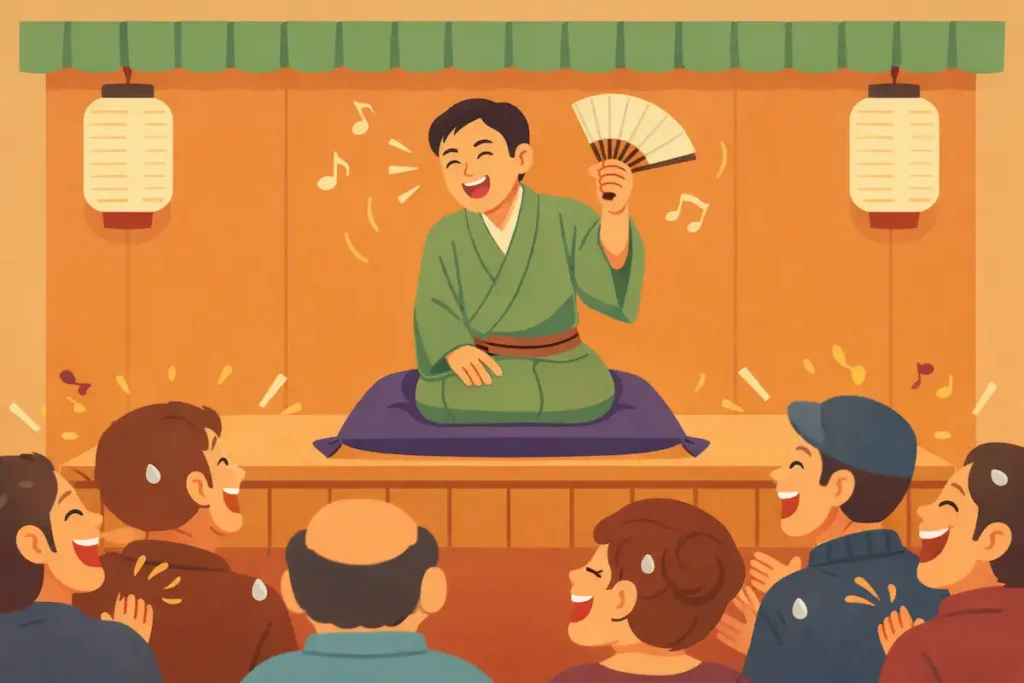
Rakugo is a traditional Japanese art of storytelling. One performer sits on a stage and tells a story by playing many different characters. The storyteller does not move much and does not use big stage sets. Instead, the story is created through voice, facial expressions, and timing. Rakugo began in the Edo period and was enjoyed by ordinary people. Even today, it is still popular in theaters, on TV, and on the internet.
Simple Tools and Performance Style
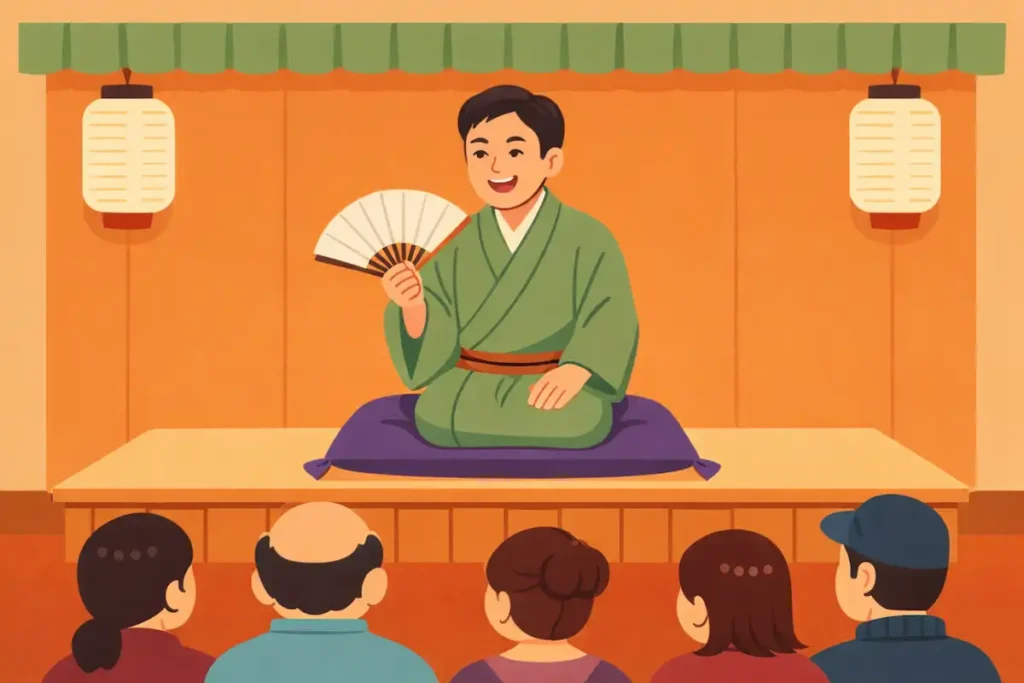
In rakugo, only two simple props are used: a fan and a small towel. These can become many things, such as chopsticks, a sword, a cup, or a letter. By changing the way they are held, the audience can imagine different objects. The performer also turns the face slightly left or right to show different characters in a conversation. This simple style makes the audience use their imagination.
Story Structure and Ending
A rakugo story usually has three parts. First comes the opening talk, called “makura,” where the performer speaks about daily life or recent topics. Next is the main story, which often shows human mistakes, kindness, or funny situations. At the end, there is a punch line called the “ochi.” This final line gives a surprise or a clever twist and makes people laugh.
Charm of Rakugo
The charm of rakugo is that one person can create a whole world with only words. The stories are old, but the feelings are easy to understand even today. People can relax, laugh, and sometimes feel touched. Because of this, rakugo is loved by many generations and is an important part of Japanese culture.
10の質問(落語の基本がわかるQ&A)
「落語」について、理解を深めるための「英語での10の質問」です。
和訳付
会話 / dialogue
Lately, I’ve become really interested in rakugo. I watched a short video online, and it was more interesting than I expected.
最近、落語にすごく興味が出てきたんだ。ネットで短い動画を見たんだけど、思っていた以上に面白くてさ。
That’s nice! Rakugo is a great way to understand Japanese humor and culture. What caught your attention?
いいね!落語って日本のユーモアや文化を知るのにすごくいいよ。どんなところが気になったの?
I was surprised that only one person could act as many characters without moving much.
ほとんど動かないのに、一人で何人もの役を演じているのが驚きだったよ。
Yes, the storyteller sits and uses only voice, face, and timing. That’s one of its main features.
そうそう。噺家は座ったまま、声や表情、間だけで表現するんだ。それが落語の大きな特徴の一つだね。
And they only use a fan and a towel, right?
それに、小道具は扇子と手ぬぐいだけなんだよね?
Exactly. Those simple tools can become chopsticks, a sword, a cup, or even a letter.
その通り。そのシンプルな道具が、箸にも刀にも、お酒の杯にも、手紙にもなるんだ。
It’s amazing how the audience can imagine the whole scene with almost no props.
ほとんど何もないのに、情景が頭に浮かぶのって本当にすごいよね。
That’s the power of words and imagination in rakugo.
それが落語の言葉と想像力の力なんだよ。
I also heard about something called an “ochi.”
「オチ」っていうのがあるって聞いたよ。
The ochi is the punch line at the end. It gives a surprise or a clever twist.
オチは最後の決めの一言で、意外性や言葉のひねりで締めくくるんだ。
So the structure is opening talk, main story, and then the ochi?
じゃあ、構成は導入の話、本編、そしてオチ、って感じなんだね。
Yes, first the makura, then the story, and finally the ending joke.
うん。最初が「まくら」、次が本題、最後がオチだよ。
What kinds of stories are common?
どんな話が多いの?
Many are about daily life, funny mistakes, or human feelings. Some are touching, and some are even scary.
日常の出来事や失敗談、人情の話が多いよ。感動する話もあれば、怪談もある。
I like that they show real human nature, like kindness and weakness.
優しさとか弱さとか、人間らしさが描かれているのがいいよね。
That’s one of the great points of rakugo. It feels old, but the emotions are still very modern.
そこが落語のすごいところだね。昔の話なのに、感情は今の私たちにも通じる。
It must be hard to make people laugh using only voice and pauses.
声と間だけで笑わせるのって、相当難しそうだよね。
Yes, good timing and silence are very important. A small pause can change everything.
うん。タイミングと沈黙がすごく大事で、ほんの一瞬の間が笑いを生むんだ。
I’d love to watch a live performance at a yose in Tokyo.
東京の寄席で生の落語を見てみたいな。
You should. The atmosphere is special, and you can feel the connection with the storyteller.
ぜひ行ったほうがいいよ。雰囲気が独特で、噺家との一体感も感じられる。
I think rakugo is simple, but at the same time very deep.
落語ってシンプルだけど、すごく奥が深い気がする。
I agree. One person creates a whole world, and the audience completes it with imagination.
ほんとだね。一人が世界を作って、観客が想像力で完成させるんだ。
That’s probably why it has been loved for hundreds of years.
だから何百年も愛され続けているんだろうね。
Yes, and even today, many young people are starting to enjoy it again.
そうだね。今は若い人たちの間でもまた人気が出てきているよ。
I want to learn more stories and maybe understand the jokes better in Japanese.
もっと演目を知って、日本語のオチもちゃんと分かるようになりたいな。
That’s a great goal. Rakugo is a wonderful way to learn language and culture together.
いい目標だね。落語は言葉と文化を一緒に学べる最高の方法だよ。
概要(落語とは?構成・特徴・魅力がわかる日本の伝統話芸)
落語
What is Rakugo
Rakugo is a traditional Japanese art of storytelling. One performer sits on a stage and tells a story by playing many different characters. The storyteller does not move much and does not use big stage sets. Instead, the story is created through voice, facial expressions, and timing. Rakugo began in the Edo period and was enjoyed by ordinary people. Even today, it is still popular in theaters, on TV, and on the internet.
落語は日本の伝統的な話芸です。一人の噺家が高座に座り、声や表情、間を使って複数の人物を演じ分けながら物語を語ります。大きな動きや舞台装置は使わず、江戸時代から庶民に親しまれてきました。現在でも寄席やテレビ、インターネットで楽しまれています。
Simple Tools and Performance Style
In rakugo, only two simple props are used: a fan and a small towel. These can become many things, such as chopsticks, a sword, a cup, or a letter. By changing the way they are held, the audience can imagine different objects. The performer also turns the face slightly left or right to show different characters in a conversation. This simple style makes the audience use their imagination.
落語で使う道具は扇子と手ぬぐいだけです。これらは箸や刀、酒の杯、手紙など、さまざまな物に見立てられます。持ち方を変えるだけで別の物に見え、顔の向きを左右に変えることで登場人物を演じ分けます。このシンプルさが想像力を引き出します。
Story Structure and Ending
A rakugo story usually has three parts. First comes the opening talk, called “makura,” where the performer speaks about daily life or recent topics. Next is the main story, which often shows human mistakes, kindness, or funny situations. At the end, there is a punch line called the “ochi.” This final line gives a surprise or a clever twist and makes people laugh.
落語の話は通常三つの部分で構成されます。最初は「まくら」と呼ばれる導入で、日常の話題などが語られます。次に本題があり、人の失敗や優しさ、可笑しさが描かれます。最後に「オチ」という決めの一言があり、意外性やひねりで笑いを生みます。
Charm of Rakugo
The charm of rakugo is that one person can create a whole world with only words. The stories are old, but the feelings are easy to understand even today. People can relax, laugh, and sometimes feel touched. Because of this, rakugo is loved by many generations and is an important part of Japanese culture.
落語の魅力は、たった一人が言葉だけで一つの世界を作り出せることです。話は昔のものですが、そこに描かれる感情は今の私たちにもよく伝わります。笑ったり、ほっとしたり、時には感動したりできるため、世代を超えて愛される日本文化となっています。
10の質問(落語の基本がわかるQ&A)
1: What is rakugo?
落語とは何ですか?
Rakugo is a traditional Japanese storytelling art where one performer sits and tells a story by playing many characters using voice and timing.
落語は、一人の演者が座ったまま、声や間を使って複数の人物を演じ分けながら物語を語る日本の伝統的な話芸です。
2: When did rakugo begin?
落語はいつ頃始まりましたか?
Rakugo developed in the Edo period and became popular among ordinary people.
落語は江戸時代に発展し、庶民の間で人気を集めました。
3: What tools does a rakugo performer use?
落語家はどんな道具を使いますか?
The performer uses only a fan and a small towel to show many different objects.
演者は扇子と手ぬぐいだけを使って、さまざまな物を表現します。
4: How does one person show many characters?
一人でどのように多くの登場人物を表しますか?
The storyteller changes voice, facial expression, and face direction to act as different people.
噺家は声、表情、顔の向きを変えることで別の人物を演じ分けます。
5: What is the basic structure of a rakugo story?
落語の基本的な構成は何ですか?
A story has an opening talk, the main story, and a punch line at the end.
話は導入、本題、そして最後のオチという構成になっています。
6: What is the “ochi”?
「オチ」とは何ですか?
The ochi is the final line that gives a surprise or a funny twist.
オチは、意外性や言葉のひねりで笑いを生む最後の一言です。
7: What kinds of stories are common in rakugo?
落語にはどんな種類の話がありますか?
Many stories are about daily life, human mistakes, kindness, and sometimes ghosts.
日常生活や人の失敗、優しさ、時には怪談などが題材になります。
8: Why is timing important in rakugo?
なぜ落語では「間」が大切なのですか?
Good pauses and timing make the story more natural and help people laugh.
適切な間とタイミングが、話を自然にし、笑いを生みます。
9: Where can people watch rakugo today?
今ではどこで落語を見ることができますか?
People can enjoy rakugo at theaters, on TV, and on the internet.
寄席、テレビ、インターネットなどで落語を楽しむことができます。
10: Why is rakugo still popular?
なぜ落語は今でも人気があるのですか?
Rakugo is simple but deep, and its stories about human feelings are easy to understand even today.
落語はシンプルですが奥が深く、人間の感情を描いた話が今でも共感しやすいからです。
words & phrases
英会話ダイアローグと関連情報に出てきた単語・フレーズです(例文は各3つ)。
prop : 名詞 /prɒp/
意味: 小道具。A small object used in a performance, play, or film.
(落語で使われる扇子や手ぬぐいなどの簡単な道具を指す)
例文:
•The actor used a simple prop to show a sword.
「その俳優は刀を表すために簡単な小道具を使いました。」
•In rakugo, only a few props are used.
「落語では、いくつかの小道具しか使われません。」
•This cup is just a prop, not real.
「このコップは本物ではなく小道具です。」
punch line : 名詞 /ˈpʌntʃ laɪn/
意味: オチ、決めの一言。The final line of a joke or story that makes it funny.
(落語の最後に来る「オチ」を表す言葉)
例文:
•The punch line made everyone laugh.
「そのオチでみんなが笑いました。」
•He forgot the punch line of the joke.
「彼はその冗談のオチを忘れました。」
•The story had a clever punch line.
「その話には気の利いたオチがありました。」
twist : 名詞 /twɪst/
意味: 意外な展開、ひねり。A sudden and surprising change in a story.
(オチで意味が反転するような意外性を表す)
例文:
•The ending had a big twist.
「結末には大きなどんでん返しがありました。」
•I didn’t expect that twist in the story.
「その話にそんなひねりがあるとは思いませんでした。」
•The movie’s twist surprised everyone.
「その映画のどんでん返しは皆を驚かせました。」
touching : 形容詞 /ˈtʌtʃ.ɪŋ/
意味: 感動的な、心に触れる。Making you feel sad or happy in a warm way.
(人情噺など、心を打つ落語の話を表す)
例文:
•It was a very touching story.
「とても感動的な話でした。」
•The scene was touching and made me cry.
「その場面は感動的で泣いてしまいました。」
•She told a touching episode from her life.
「彼女は心に残る体験談を話しました。」
scary : 形容詞 /ˈskeə.ri/
意味: 怖い。Causing fear.
(落語の怪談噺のような怖い話を表す)
例文:
•It was a scary ghost story.
「それは怖い怪談でした。」
•The movie was too scary for me.
「その映画は私には怖すぎました。」
•He told a scary story at night.
「彼は夜に怖い話をしました。」