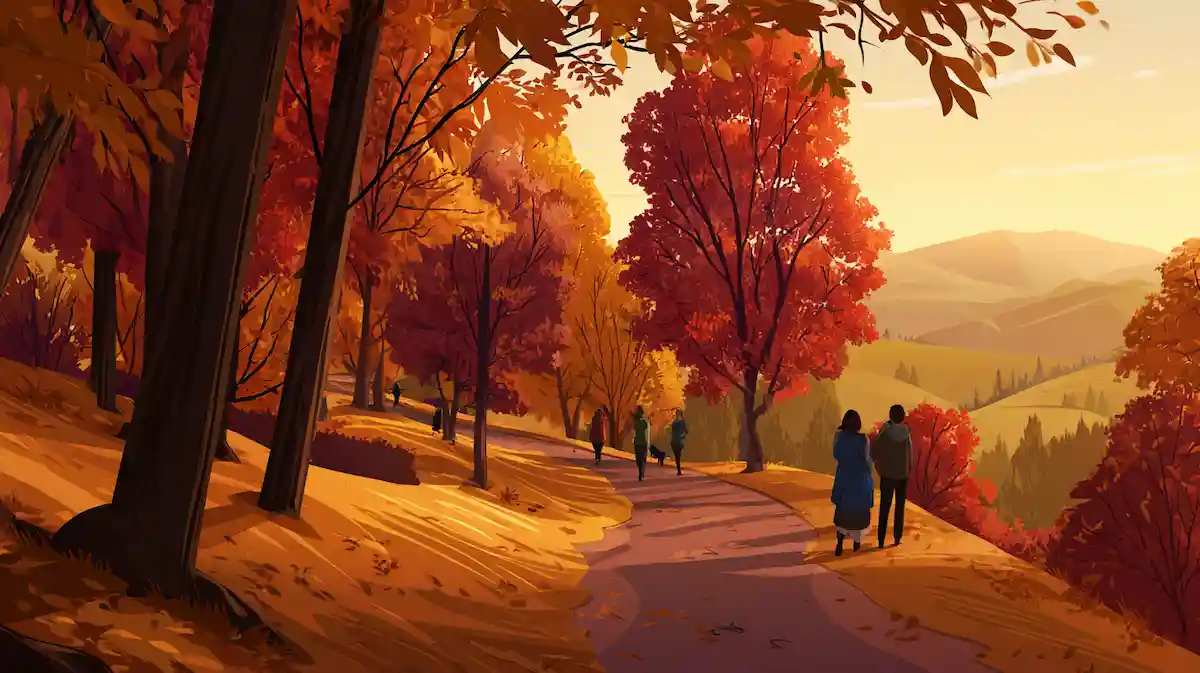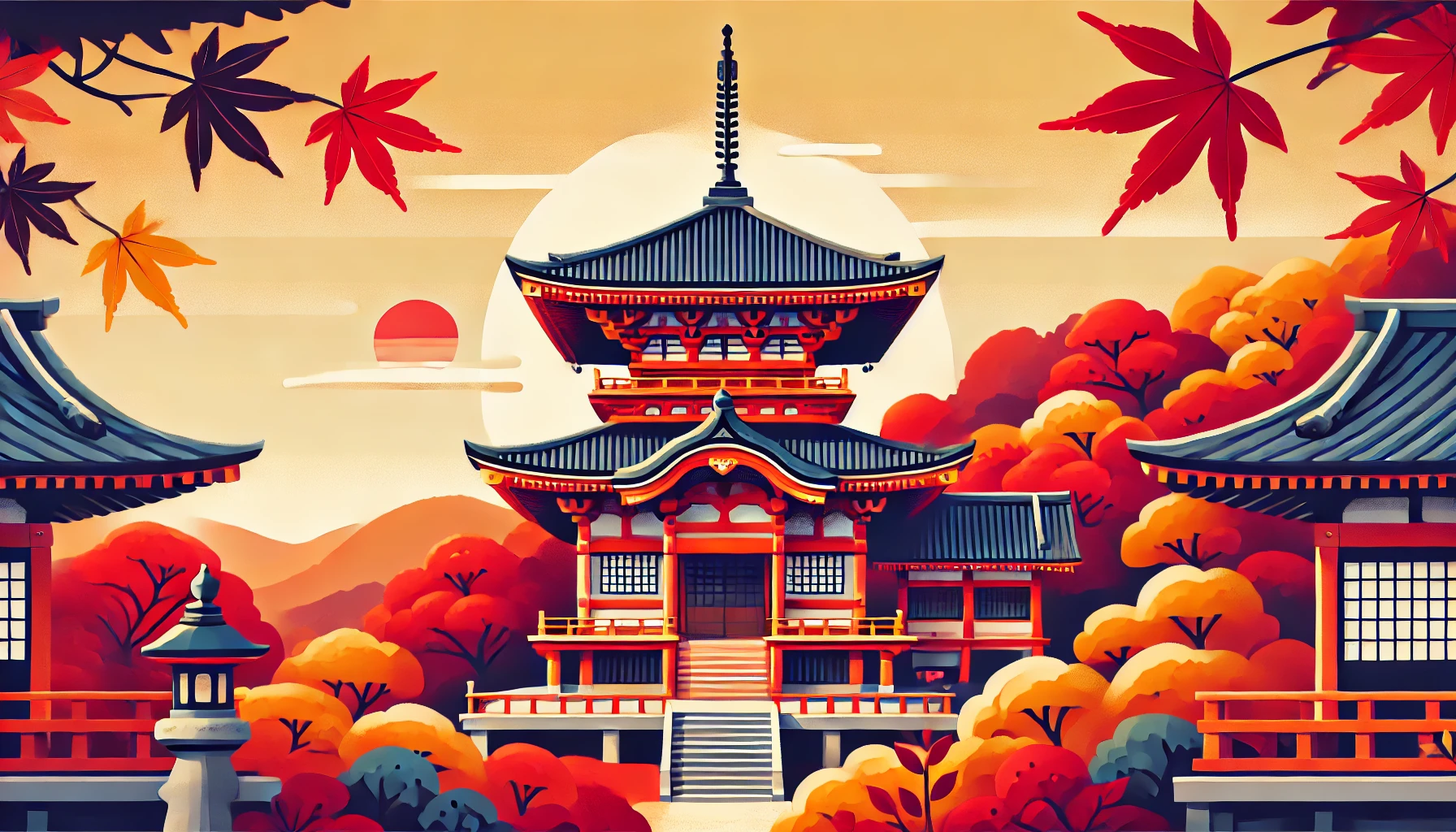
紅葉狩りを英語で説明・紹介するための基本情報と、英会話に役立つ表現をシンプルでわかりやすい英語で紹介します。
英会話ダイアローグ・関連情報・10の質問を通して、紅葉狩りに関する英語表現を学びます。
英語
英会話ダイアローグを読む前に知っておくと良い前提知識と情報です。
- 紅葉狩りとは:
- 秋に紅葉した木々の美しさを楽しむ日本の伝統的な習慣
- 歴史的背景:
- 紅葉狩りの起源は平安時代(794-1185年)にさかのぼる
- 当時、貴族たちは庭園や山に出かけ、紅葉を楽しんでいた
- 有名なスポット:
- 楽しみ方:
- ただ紅葉を見るだけでなく、温泉やハイキング、季節の食べ物を楽組み合わせると充実した体験になる
- 外国人観光客の人気:
- 外国人観光客の間でも人気があり、美しい景色や文化的な体験が引きつけている
2人が紅葉狩りについて話しています。
秋の風物詩の紅葉狩りの歴史的背景、有名な場所、楽しみ方、外国人旅行者の間での人気などを話題にしています。
会話 / dialogue

Hey Key, I’ve been hearing a lot about momijigari lately. I’m really interested in it. Do you know much about it?

Yeah, momijigari is a big thing here in Japan, especially during autumn. It’s all about enjoying the beautiful colors of the leaves, particularly the red and yellow maples.
That sounds amazing! Is it a modern tradition, or has it been around for a while?
It actually dates back to the Heian period, so it’s been a part of Japanese culture for over a thousand years. Back then, aristocrats would go out to admire the autumn leaves in gardens or mountains.
Wow, I didn’t realize it had such a long history. Are there specific places that are famous for momijigari?
Definitely! Kyoto is one of the top spots. Temples like Kiyomizu-dera and Tofuku-ji are famous for their stunning autumn scenery. Nikko is another great place, especially around Lake Chuzenji and Irohazaka. And if you’re near Tokyo, Mount Takao is a convenient and beautiful spot.
I’ve heard a lot about Kyoto’s temples. They must look incredible with all the autumn colors. What’s the best time to visit for momijigari?
The timing depends on the location. In the north, like Hokkaido, the leaves start changing in late September. In places like Kyoto, the peak is usually in November. It’s best to check the local forecasts to catch the leaves at their most vibrant.
I see. I imagine it can get pretty crowded at those famous spots, right?
Yeah, especially on weekends. If you want to avoid the crowds, it’s a good idea to go early in the morning or later in the afternoon. The light is also great for photos at those times.
Good tip! Speaking of photos, I bet the scenery makes for some amazing pictures.
Absolutely. The contrast between the red, orange, and yellow leaves against the traditional architecture or natural landscapes is really something special. It’s a photographer’s dream.
Besides just viewing the leaves, is there anything else to do during momijigari?
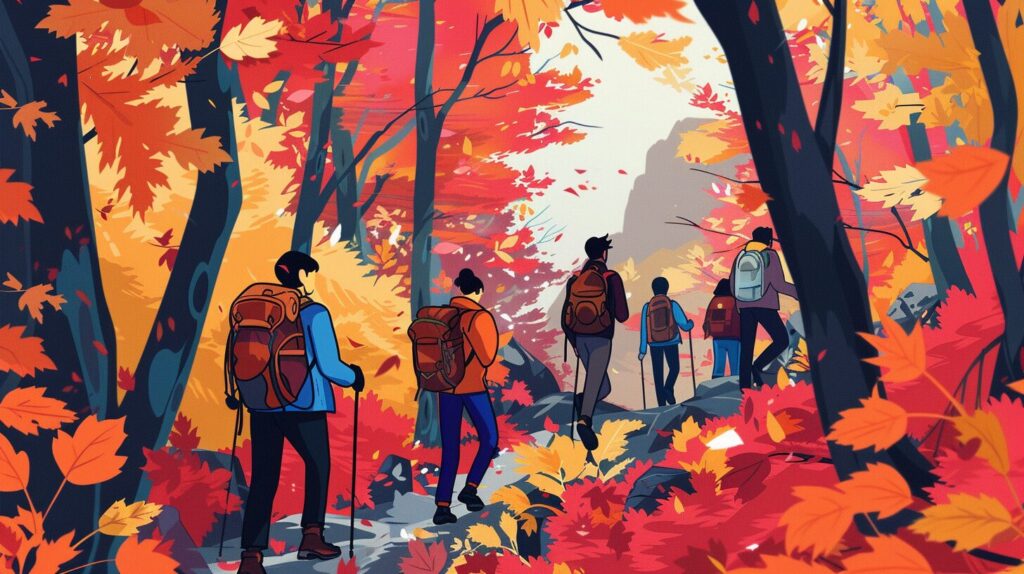
A lot of people combine it with other activities. For example, after enjoying the leaves, you can visit a nearby hot spring, go hiking, or enjoy some seasonal food like chestnut rice or grilled sanma.
That sounds perfect. I love the idea of soaking in a hot spring after a day of exploring. Do many foreign tourists get into momijigari?
Definitely. It’s becoming more popular with tourists every year. The unique seasonal experience, the cultural significance, and the beautiful photo opportunities all make it really appealing.
I can see why. I think I’m going to plan a trip to Kyoto or Nikko this autumn to experience it myself.
Great idea! Just make sure to plan ahead, especially if you’re visiting a popular spot. It’ll be a trip to remember.
Thanks for the advice, Key. I’m really excited to see the autumn colors and experience momijigari firsthand.
You’re welcome! Enjoy the beauty of autumn in Japan!
関連情報 / related information
「紅葉狩り」について、理解を深めるための「英語での関連情報」です。
紅葉狩り
What is Momijigari?
Momijigari is a traditional Japanese activity where people go out to enjoy the beautiful autumn leaves. The word “momijigari” literally means “hunting for red leaves.” This tradition has been a part of Japanese culture for over a thousand years, dating back to the Heian period (794-1185). During this time, nobles would visit gardens and mountains to admire the colorful leaves, especially the red and yellow maple leaves.
Popular Places for Momijigari
There are many famous spots in Japan for momijigari. Kyoto is one of the most popular places, with its beautiful temples like Kiyomizu-dera and Tofuku-ji. Nikko, located in Tochigi Prefecture, is also well-known for its autumn scenery, especially around Lake Chuzenji and the Irohazaka Winding Road. If you’re near Tokyo, Mount Takao is a convenient place to enjoy the autumn colors.
How to Enjoy Momijigari
To fully enjoy momijigari, it’s best to visit during the peak season, which varies by location. In northern areas like Hokkaido, the leaves start changing in late September, while in places like Kyoto, the peak is usually in November. Besides viewing the leaves, many people combine momijigari with other activities like visiting hot springs, hiking, or enjoying seasonal foods such as chestnut rice and grilled sanma.
10の質問 / 10 questions
「紅葉狩り」について、理解を深めるための「英語での10の質問」です。
1: What is momijigari?
Momijigari is a traditional Japanese activity where people go out to enjoy and appreciate the colorful autumn leaves, especially the red and yellow maple leaves.
2: When did momijigari start?
Momijigari started during the Heian period (794-1185) in Japan. It has been a part of Japanese culture for over a thousand years.
3: Where are some popular spots for momijigari?
Some popular spots for momijigari include Kyoto, especially temples like Kiyomizu-dera and Tofuku-ji, Nikko in Tochigi Prefecture, and Mount Takao near Tokyo.
4: When is the best time for momijigari?
The best time for momijigari varies by location. In northern Japan, like Hokkaido, the peak is in late September, while in central Japan, like Kyoto, the peak is usually in November.
5: What activities can be combined with momijigari?
People often combine momijigari with activities like visiting hot springs, hiking, or enjoying seasonal foods such as chestnut rice and grilled Pacific saury.
6: Why is momijigari popular among foreign tourists?
Momijigari is popular among foreign tourists because it offers a unique seasonal experience, a chance to learn about Japanese culture, and great opportunities for photography.
7: What does the word "momijigari" mean?
The word “momijigari” literally means “hunting for red leaves.” It refers to the activity of going out to view and enjoy the autumn foliage.
8: How can you avoid crowds during momijigari?
To avoid crowds during momijigari, it’s best to visit early in the morning or later in the afternoon, especially on weekdays.
9: What foods are popular during momijigari season?
Popular foods during the momijigari season include chestnut rice, sweet potato dishes, and grilled Pacific saury, which are all associated with autumn.
10: Is momijigari only about viewing leaves?
No, momijigari is not just about viewing leaves. It also includes enjoying the overall experience of autumn, including cultural activities, seasonal foods, and spending time in nature.
和訳付
会話 / dialogue
Hey Key, I’ve been hearing a lot about momijigari lately. I’m really interested in it. Do you know much about it?
キー、最近、紅葉狩りについてよく聞くんだ。すごく興味があるんだけど、知ってることある?
Yeah, momijigari is a big thing here in Japan, especially during autumn. It’s all about enjoying the beautiful colors of the leaves, particularly the red and yellow maples.
うん、紅葉狩りは日本では特に秋にすごく人気があるよ。紅葉した葉っぱの綺麗な色、特に赤や黄色のカエデを楽しむんだ。
That sounds amazing! Is it a modern tradition, or has it been around for a while?
それって素晴らしいね!現代の伝統なのかな、それとも昔からあるもの?
It actually dates back to the Heian period, so it’s been a part of Japanese culture for over a thousand years. Back then, aristocrats would go out to admire the autumn leaves in gardens or mountains.
実は平安時代にさかのぼるから、1000年以上日本文化の一部なんだよ。当時、貴族たちは庭園や山に出かけて秋の葉を楽しんでいたんだ。
Wow, I didn’t realize it had such a long history. Are there specific places that are famous for momijigari?
へぇ、そんなに長い歴史があるとは知らなかったよ。紅葉狩りで有名な場所ってどこかあるの?
Definitely! Kyoto is one of the top spots. Temples like Kiyomizu-dera and Tofuku-ji are famous for their stunning autumn scenery. Nikko is another great place, especially around Lake Chuzenji and Irohazaka. And if you’re near Tokyo, Mount Takao is a convenient and beautiful spot.
もちろんあるよ!京都が一番人気の場所のひとつだね。清水寺や東福寺みたいな寺院は、素晴らしい秋の景色で有名だよ。日光もおすすめで、中禅寺湖やいろは坂の周辺が特に綺麗なんだ。東京の近くなら、高尾山も便利で美しい場所だよ。
I’ve heard a lot about Kyoto’s temples. They must look incredible with all the autumn colors. What’s the best time to visit for momijigari?
京都の寺院についてはよく聞くよ。秋の色に染まった景色は素晴らしいに違いないね。紅葉狩りに行くのに一番良い時期はいつ?
The timing depends on the location. In the north, like Hokkaido, the leaves start changing in late September. In places like Kyoto, the peak is usually in November. It’s best to check the local forecasts to catch the leaves at their most vibrant.
時期は場所によるんだ。北部の北海道みたいなところでは9月下旬に葉が色づき始めるんだ。京都みたいな場所では、だいたい11月がピークだね。一番綺麗な時期を狙うなら、地元の紅葉予報を確認するのが一番だよ。
I see. I imagine it can get pretty crowded at those famous spots, right?
なるほど。有名な場所だとかなり混雑するんじゃない?
Yeah, especially on weekends. If you want to avoid the crowds, it’s a good idea to go early in the morning or later in the afternoon. The light is also great for photos at those times.
そうだね、特に週末は混むよ。混雑を避けたいなら、朝早くか午後遅くに行くのが良いと思うよ。その時間帯は写真を撮るのにも良い光が入るんだ。
Good tip! Speaking of photos, I bet the scenery makes for some amazing pictures.
良いアドバイスだね!そういえば、写真の話だけど、景色は素晴らしい写真になりそうだね。
Absolutely. The contrast between the red, orange, and yellow leaves against the traditional architecture or natural landscapes is really something special. It’s a photographer’s dream.
その通りだよ。赤、オレンジ、黄色の葉っぱと伝統的な建物や自然の風景とのコントラストは本当に特別なんだ。写真家にとっては夢のような光景だよ。
Besides just viewing the leaves, is there anything else to do during momijigari?
紅葉を見るだけじゃなくて、他に何かできることってあるの?
A lot of people combine it with other activities. For example, after enjoying the leaves, you can visit a nearby hot spring, go hiking, or enjoy some seasonal food like chestnut rice or grilled sanma.
たくさんの人が他のアクティビティと組み合わせて楽しんでるよ。例えば、紅葉を楽しんだ後に近くの温泉に行ったり、ハイキングしたり、栗ご飯やサンマの塩焼きみたいな季節の食べ物を楽しんだりできるよ。
That sounds perfect. I love the idea of soaking in a hot spring after a day of exploring. Do many foreign tourists get into momijigari?
それは最高だね。探検の後に温泉でゆっくりするなんていいなぁ。紅葉狩りは外国人旅行者にも人気があるの?
Definitely. It’s becoming more popular with tourists every year. The unique seasonal experience, the cultural significance, and the beautiful photo opportunities all make it really appealing.
うん、年々人気が高まってるよ。独特の季節感、文化的な意義、そして美しい写真を撮る機会が、観光客を引きつけているんだ。
I can see why. I think I’m going to plan a trip to Kyoto or Nikko this autumn to experience it myself.
なるほどね。それなら、この秋に京都か日光に行って、自分で体験してみようかな。
Great idea! Just make sure to plan ahead, especially if you’re visiting a popular spot. It’ll be a trip to remember.
それはいいね!特に人気の場所に行くなら、計画をしっかり立てておくといいよ。きっと忘れられない旅になるよ。
Thanks for the advice, Key. I’m really excited to see the autumn colors and experience momijigari firsthand.
アドバイスありがとう、キー。秋の色を見て、紅葉狩りを自分の目で体験するのが楽しみだよ。
You’re welcome! Enjoy the beauty of autumn in Japan!
どういたしまして!日本の秋の美しさを楽しんでね!
関連情報 / related information
紅葉狩り
What is Momijigari?
Momijigari is a traditional Japanese activity where people go out to enjoy the beautiful autumn leaves. The word “momijigari” literally means “hunting for red leaves.” This tradition has been a part of Japanese culture for over a thousand years, dating back to the Heian period (794-1185). During this time, nobles would visit gardens and mountains to admire the colorful leaves, especially the red and yellow maple leaves.
紅葉狩りは、美しい秋の紅葉を楽しむために外出する日本の伝統的な活動です。「紅葉狩り」という言葉は、文字通り「赤い葉を狩る」という意味です。この伝統は1000年以上前の平安時代(794-1185年)にさかのぼり、日本文化の一部として続いてきました。当時、貴族たちは庭園や山を訪れ、特に赤や黄色のカエデの葉を鑑賞していました。
Popular Places for Momijigari
There are many famous spots in Japan for momijigari. Kyoto is one of the most popular places, with its beautiful temples like Kiyomizu-dera and Tofuku-ji. Nikko, located in Tochigi Prefecture, is also well-known for its autumn scenery, especially around Lake Chuzenji and the Irohazaka Winding Road. If you’re near Tokyo, Mount Takao is a convenient place to enjoy the autumn colors.
日本には、紅葉狩りで有名な場所がたくさんあります。京都は最も人気のある場所の一つで、清水寺や東福寺のような美しい寺院があります。栃木県にある日光も、特に中禅寺湖やいろは坂の周辺の秋の景色で有名です。東京の近くにいるなら、高尾山が便利で紅葉を楽しめる場所です。
How to Enjoy Momijigari
To fully enjoy momijigari, it’s best to visit during the peak season, which varies by location. In northern areas like Hokkaido, the leaves start changing in late September, while in places like Kyoto, the peak is usually in November. Besides viewing the leaves, many people combine momijigari with other activities like visiting hot springs, hiking, or enjoying seasonal foods such as chestnut rice and grilled sanma.
紅葉狩りを十分に楽しむためには、場所によって異なるピークシーズンに訪れるのが最適です。北海道のような北部では9月下旬に葉が色づき始め、京都のような場所では通常11月がピークです。紅葉を見るだけでなく、温泉訪問やハイキング、栗ご飯やサンマの塩焼きなどの季節の食べ物を楽しむことと組み合わせる人も多いです。
10の質問 / 10 questions
1: What is momijigari?
紅葉狩りとは何ですか?
Momijigari is a traditional Japanese activity where people go out to enjoy and appreciate the colorful autumn leaves, especially the red and yellow maple leaves.
紅葉狩りは、秋の紅葉、特に赤や黄色のカエデの葉を楽しむために外出する日本の伝統的な活動です。
2: When did momijigari start?
紅葉狩りはいつ始まりましたか?
Momijigari started during the Heian period (794-1185) in Japan. It has been a part of Japanese culture for over a thousand years.
紅葉狩りは、日本の平安時代(794-1185年)に始まりました。1000年以上にわたり日本文化の一部として続いています。
3: Where are some popular spots for momijigari?
紅葉狩りの人気スポットはどこですか?
Some popular spots for momijigari include Kyoto, especially temples like Kiyomizu-dera and Tofuku-ji, Nikko in Tochigi Prefecture, and Mount Takao near Tokyo.
紅葉狩りの人気スポットには、京都の清水寺や東福寺といった寺院、栃木県の日光、そして東京近郊の高尾山があります。
4: When is the best time for momijigari?
紅葉狩りのベストな時期はいつですか?
The best time for momijigari varies by location. In northern Japan, like Hokkaido, the peak is in late September, while in central Japan, like Kyoto, the peak is usually in November.
紅葉狩りのベストな時期は場所によって異なります。北海道のような北部では9月下旬がピークで、京都のような中部では通常11月がピークです。
5: What activities can be combined with momijigari?
紅葉狩りと組み合わせられる活動には何がありますか?
People often combine momijigari with activities like visiting hot springs, hiking, or enjoying seasonal foods such as chestnut rice and grilled Pacific saury.
紅葉狩りは、温泉訪問やハイキング、栗ご飯やサンマの塩焼きといった季節の食べ物を楽しむことと組み合わせられることが多いです。
6: Why is momijigari popular among foreign tourists?
紅葉狩りが外国人旅行者に人気な理由は何ですか?
Momijigari is popular among foreign tourists because it offers a unique seasonal experience, a chance to learn about Japanese culture, and great opportunities for photography.
紅葉狩りは、季節ごとの独特の体験、日本文化を学ぶ機会、そして素晴らしい写真撮影の機会を提供するため、外国人旅行者に人気があります。
7: What does the word "momijigari" mean?
「紅葉狩り」という言葉は何を意味しますか?
The word “momijigari” literally means “hunting for red leaves.” It refers to the activity of going out to view and enjoy the autumn foliage.
「紅葉狩り」という言葉は文字通り「赤い葉を狩る」という意味です。秋の紅葉を見に行って楽しむ活動を指します。
8: How can you avoid crowds during momijigari?
紅葉狩りの混雑を避けるにはどうすればいいですか?
To avoid crowds during momijigari, it’s best to visit early in the morning or later in the afternoon, especially on weekdays.
紅葉狩りの混雑を避けるには、特に平日は朝早くか午後遅くに訪れるのが良いです。
9: What foods are popular during momijigari season?
紅葉狩りの季節に人気の食べ物は何ですか?
Popular foods during the momijigari season include chestnut rice, sweet potato dishes, and grilled Pacific saury, which are all associated with autumn.
紅葉狩りの季節に人気の食べ物には、栗ご飯、さつまいも料理、秋に関連するサンマの塩焼きがあります。
10: Is momijigari only about viewing leaves?
紅葉狩りは葉を見るだけのものですか?
No, momijigari is not just about viewing leaves. It also includes enjoying the overall experience of autumn, including cultural activities, seasonal foods, and spending time in nature.
いいえ、紅葉狩りは葉を見るだけのものではありません。文化的な活動や季節の食べ物、自然の中で過ごすことなど、秋全体の体験を楽しむことも含まれています。
words & phrases
英会話ダイアローグと関連情報に出てきた単語・フレーズです(例文は各3つ)。
date back to : フレーズ
意味: (時代に)さかのぼる、起源を持つ。To have existed since a particular time in the past.
(紅葉狩りが平安時代にさかのぼることを示す)
例文:
- The tradition of momijigari dates back to the Heian period.
「紅葉狩りの伝統は平安時代にさかのぼります。」 - This building dates back to the 18th century.
「この建物は18世紀にさかのぼります。」 - The practice of tea drinking dates back to ancient China.
「お茶を飲む習慣は古代中国にさかのぼります。」
aristocrat : 名詞
意味: 貴族。A member of the highest social class in certain societies, typically holding hereditary titles or offices.
(紅葉狩りが平安時代に貴族たちによって楽しめられたことを示す)
例文:
- During the Heian period, aristocrats enjoyed momijigari.
「平安時代には貴族たちが紅葉狩りを楽しんでいました。」 - The aristocrat lived in a grand castle.
「その貴族は豪華な城に住んでいました。」 - He married an aristocrat and gained a title.
「彼は貴族と結婚して、爵位を得ました。」
combine : 動詞
意味: 組み合わせる、結合する。To join or mix two or more things together.
(紅葉狩りが温泉訪問や季節の食べ物などと組み合わせられることを示す)
例文:
- People often combine momijigari with a visit to hot springs.
「人々は紅葉狩りを温泉訪問と組み合わせることが多いです。」 - We need to combine our efforts to succeed.
「成功するためには、私たちの努力を結合させる必要があります。」 - The chef combined various spices to create a unique flavor.
「シェフはさまざまなスパイスを組み合わせて独特の味を作り出しました。」
grilled : 形容詞・動詞
意味: 焼かれた、グリルした。Cooked by direct heat, often on a grill or over an open flame.
(秋の季節に食べられるサンマの塩焼きなどを指す)
例文:
- Grilled Pacific saury is a popular dish during the momijigari season.
「紅葉狩りの季節には、サンマの塩焼きが人気の料理です。」 - We had grilled chicken for dinner.
「夕食にグリルしたチキンを食べました。」 - The restaurant specializes in grilled meats.
「そのレストランはグリルした肉料理を専門としています。」
appealing : 形容詞
意味: 魅力的な、興味を引く。Attractive or interesting.
(紅葉狩りが外国人旅行者にとって魅力的な理由を説明するために使用)
例文:
- Momijigari is appealing to foreign tourists because it offers a unique cultural experience.
「紅葉狩りは、ユニークな文化体験を提供するため、外国人旅行者にとって魅力的です。」 - The idea of a quiet vacation in the mountains sounds very appealing.
「山で静かな休暇を過ごすという考えはとても魅力的に聞こえます。」 - The new design is more appealing to younger customers.
「新しいデザインは若い顧客にとってより魅力的です。」
詳細情報 / Further Info
関連記事